

Research · since 2018
Two hemispheres
Why do brains have two hemispheres, and can the asymmetry improve deep learning, RL and robotics?
Working on it now
Kevin Ryan
PhD · UNSW · 2026 to present
Bi-hemispheric continual RL
How we got here
- 2018Request for Research published with WBAI: Left and Right Neural Networks, inspired by our bilateral brains Read the brief ↗
- 2021Amir Mayan, Masters · Monash bicameral networks on CIFAR-100About Amir’s project →
- 2021Chandramouli Rajagopalan, Intern bilateral deep learning for image recognitionAbout Chandramouli’s project →Deep learning in a bilateral brain with hemispheric specialization · ACAIN 2024Now: Masters at UCSD
- 2022Yanfeng, Masters · Monash extending bilateral deep learningAbout Yanfeng’s project →
- 2023Jarrad Rinaldo, Masters · Monash bilateral motor controlAbout Jarrad’s project →Left/Right Brain, human motor control and the implications for robotics · ACAIN 2024
- 2023Grant Nicholas, Masters · Monash graceful task adaptationAbout Grant’s project →Graceful task adaptation with a bi-hemispheric RL agent · AJCAI 2024
- 2024Haowei Yue, Masters · Monash adding a corpus callosumAbout Haowei’s project →
- 2024Joel Reji, Masters · Monash hemisphere selection by confidenceAbout Joel’s project →
- 2024Ben Smith, Masters · Monash bilateral continual learningAbout Ben’s project →
- 2026Jingwen Li, Masters · Monash extending left/right motor controlAbout Jingwen’s project →
Project notes
Why do brains have 2 hemispheres? And can it improve Deep Learning and AI? (2021-2022)
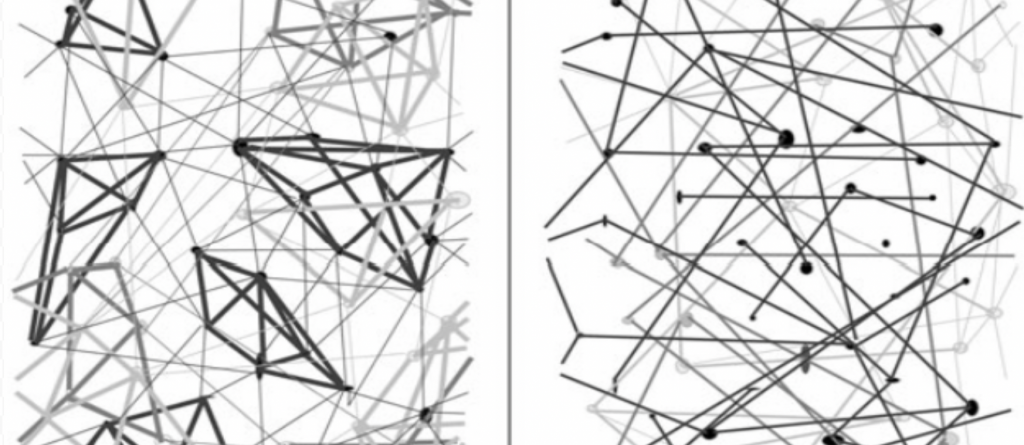
The brains of all bilaterally symmetric animals on Earth are Bicameral – they are divided into left and right hemispheres. It must be important for intelligence. In this project we mimic observed differences and show a benefit for AI. See the poster presented at NAISys2022. And the preprint.